By Connie Patterson
Carbon County Comet Contributor
Frances and Janice Bergquist have been photographing wildlife, particularly birds since Janice gave Frances his first camera for Christmas not long after they were married. It’s a journey they have undertaken together and have also shared with their sons.
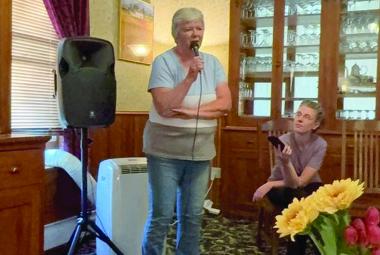
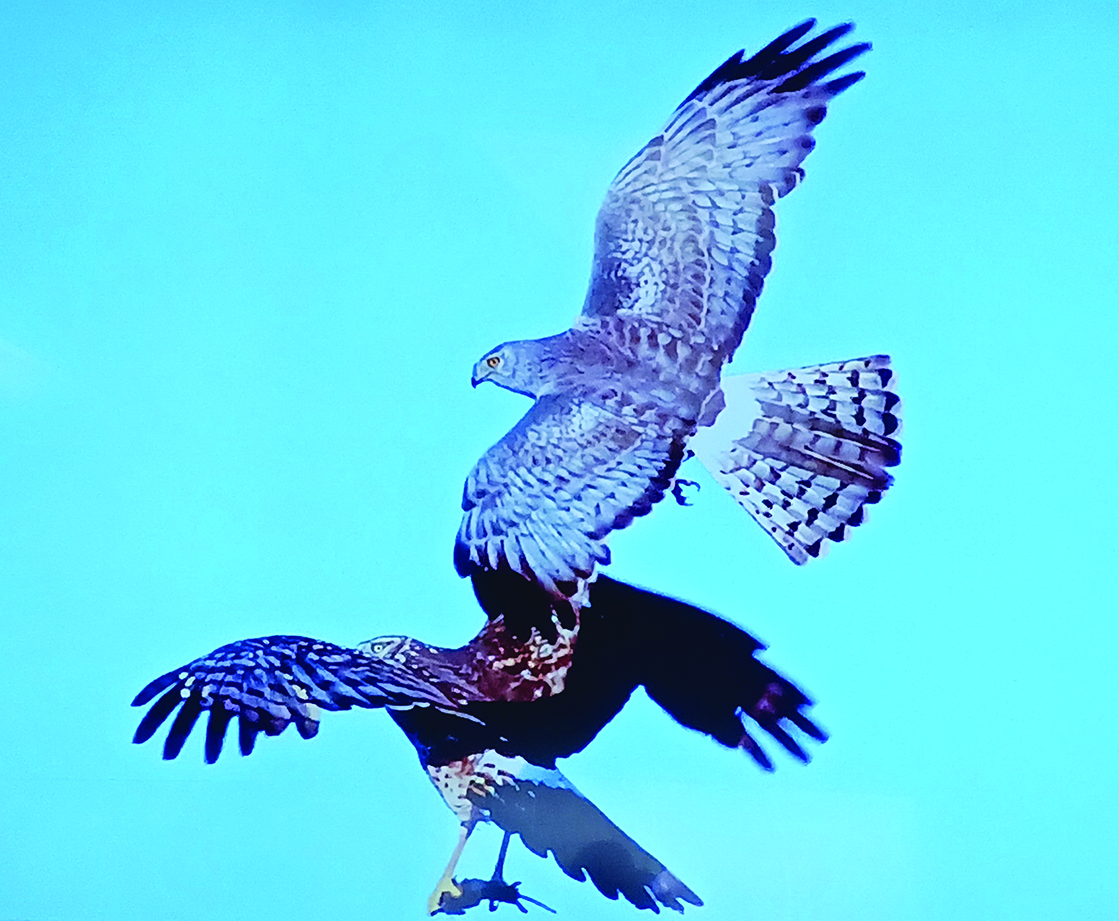
The Bergquists showed some of their photos of birds of prey with the Tuesday Talk gathering this week noting this is only a small sampling of the photos they have taken over the years. Frances noted during the slide show that some of the images were taken by his son Greg, of GCB Photos.
Although many of us may pass unknowingly by some of these magnificent birds, the Bergquists have developed a practiced eye for capturing many of the species that inhabit the upper North Platte Valley and as a result, have amassed an exceptionally extensive photo collection of not only birds of prey, but other bird species as well as other wildlife.
They started off the slide show with probably the most iconic raptor, the Bald Eagle. Although previously listed as an endangered species, the Bald Eagle has made a remarkable comeback. The Bergquists participate in an annual eagle census with Wyoming Game and Fish personnel and other volunteers. They said they counted 18 eagles last year, but only eight this year. Frances said that doesn’t mean the count has gone down, just that they didn’t have as many on their route. Each census taker counts birds along a specific route and only counts going one way so that they don’t duplicate the numbers, Janice said.
The slide show consisted of birds of prey that can be found in Carbon County, although some of the photos were taken at a bird refuge in a neighboring state. Some species a patient and observant photographer might find include the American Kestrel, which belongs to the falcon family along with Merlins, Peregrine Falcons, Prairie Falcons, and Gyrfalcons. Falcons are known for their steep dives, according to the Bergquists, and the Peregrin Falcon is the fastest bird in North America, often reaching speeds of up to 200 miles per hour as it dives, often killing, or at least stunning, its prey upon impact. The Peregrine feeds almost entirely on other bird species, ducks and shorebirds, Frances said.
Another fierce falcon is the Prairie Falcon. Frances said he has taken photos of this bird at the local landfill where it hunts starlings, but it will eat gophers, too. Frances related that one time when he was out with his son Greg, a Prairie Falcon didn’t like Greg’s dog Lilly and the photographers finally had to retreat because of the harassment the falcon was giving Lilly.
Some hawk species that can be found locally are Cooper’s Hawks and Sharp-Shinned Hawks which are very similar in appearance, and Northern Goshawks. Frances said he has seen two Goshawks in town, but they can mostly be found in the mountains. Those species feed on small mammals and birds and are classed as accipiters.
Other hawks, classed as buteos, soar above their prey dropping down in steep dives and in addition to eagles include the rough-legged hawk, the ferruginous hawk and one of the most common species locally, the red-tailed hawk, easily identified by its red tail.
Owls are also predators but might be harder to photograph because they are more nocturnal than other birds of prey.
When asked by a young student which bird is the best hunter, Frances said he thinks the Great Horned Owl is the best hunter. The Bergquist collection includes photos of western screech owls, long-haired owls, burrowing owls, and saw-whet owls.
Frances related his son Greg had built birdhouses for kestrels, but the saw-whet owls took over the houses for about four years, giving the Bergquists ample opportunity to take photos of them. They haven’t returned to the houses in several years, Frances added.
Finally, the osprey is a bird of prey that feeds entirely upon fish and can be found along seacoasts, lakes and rivers. Soaring 100 to 140 feet above a body of water, then dropping rapidly to catch a fish, often going underwater. Frances said they are successful about one out of three times.
The Bergquists have probably forgotten more about birds than most of us will ever know, but they do their part to keep the birds happy and well-fed, stocking their backyard feeders and other feeders, including at the snowmobile parking lot in Ryan Park. When asked how they are able to get such great photos, Janice said to just be prepared by always taking a camera with you when you venture outdoors.
Next week’s Tuesday Talks will be an open session with no set program so that attendees may discuss upcoming plans. Tuesday Talks are held at the Platte Valley Community Center weekly on Tuesday mornings at 10 a.m. Everyone is welcome to attend.