By Mike Armstrong
Reporter, Carbon County Comet
Living in Carbon County is getting more expensive with housing prices going up, meaning property taxes are also rising along with gasoline, food, consumer electronics, vehicles and the list goes on.
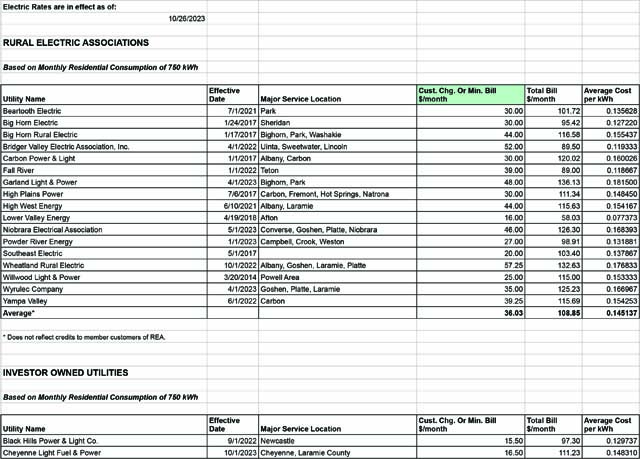
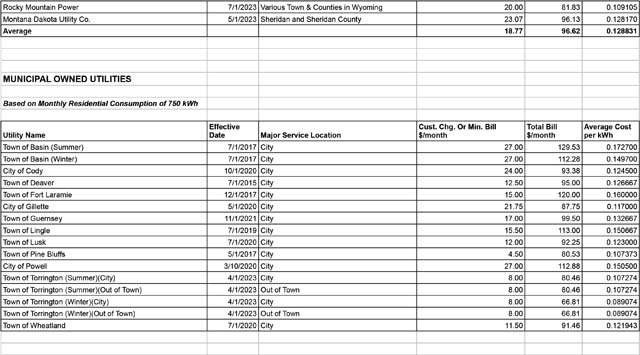
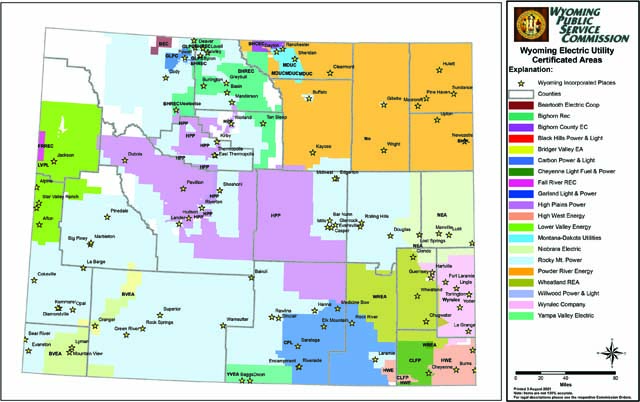
Carbon County citizens and businesses are served by four retail electricity providers; Rocky Mountain Power is an investor-owned utility (IOU); and there are three rural electric co-ops; High Plains Power, Carbon Power and Light, and Yampa Valley Electric.
IOUs can set prices and control the market. They differ from government-owned or cooperative power utilities, which focus on service and community involvement rather than profits.
The IOUs generate revenue by selling goods and services, resulting in profitability. Utilities use this money to cover costs, such as plant maintenance, salaries, marketing, and other operating expenses. Prices of these services are often regulated by state laws or public utility commissions. IOUs are publicly traded companies, which means management, board members, and investors are all located at corporate headquarters rather than locally. This often results in less local accountability since decisions about rates and services are made centrally rather than through dialogue with customers or stakeholders. The advantage of IOUs versus cooperative power utilities is they can be more efficient and consumers get price breaks.
Community-owned utilities (COU) are typically run by members of their communities, which gives them more incentive to respond to customer demands for sustainable energy sources. They are also usually controlled by boards or committees composed of locals rather than stockholders. This means they have more flexibility when making decisions on pricing and new technology and are concerned about the impact of changing economic cycles in their areas. This doesn’t necessarily make them cheaper, but many customers find them more responsive. A complaint can be addressed quickly when it is a local talking to a local. Plus a COU often gives back directly to community projects, whereas IOUs give back to customer’s communities, but often in the form of grants.
Rocky Mountain is considering a rate increase. It is interesting to note, as it stands currently, it is the cheaper utility company in Carbon County. Even with the proposed rate increase, it might stay that way.
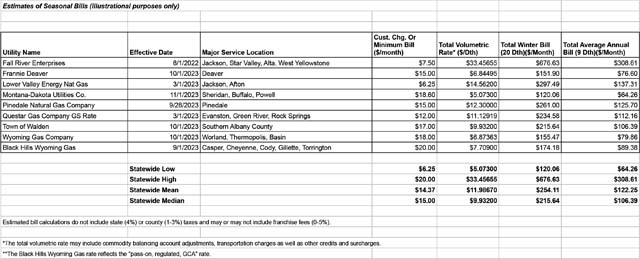
Both IOUs and COUs have their pros and cons which customers should be aware of, but the world of utilities can be looked at in depth with charts and maps to figure out what is unfair and what is not.