By K.J. Schricker
Writer, Carbon County Comet
The West is filled with iconic images of mankind’s need to travel and trade, like natives pulling travois, grand trading canoes of the Voyageurs and the lone prospector with his overburdened donkey. In the past few decades, an ideal creature from another continent has come to the Platte Valley.
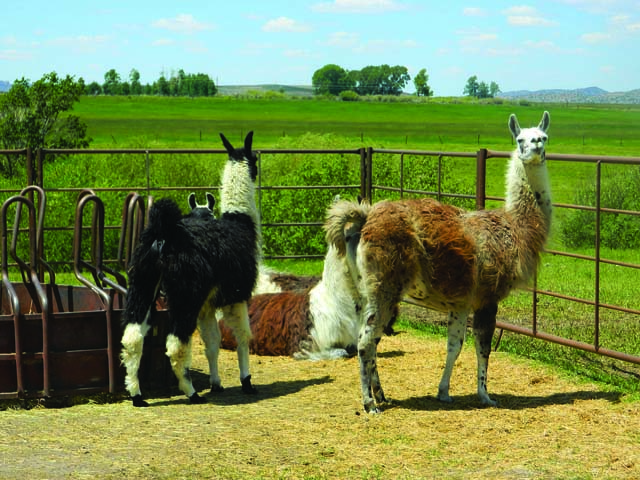
In the 19th century, camels were brought to the American West as beasts of burden from Africa and the Middle East but only formed a footnote in the expansion of the American Nation. Today, a hearty cousin of the camel has come to the Sierra Madre and Snowy Range Mountains–pack llamas thanks to the 307 Llama Company.
With a safe packing weight of around 80 pounds, the ability to travel 10 miles per day and the ability to go up to four days without water, the llama is right at home in this semiarid landscape of sage brush prairies, dry alpine forests and mountain meadows. Their native ranges of the Andes Mountains and Patagonia are much more arid and the graze is poorer than the fare these persevering pack animals have at their disposal.
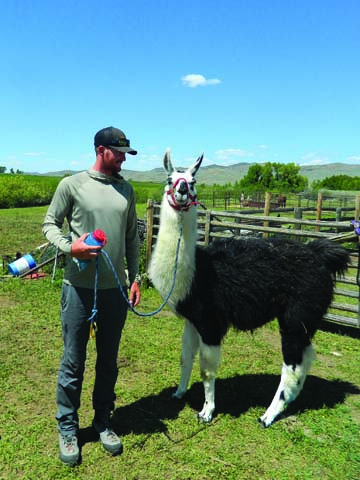
When speaking with Anthony, owner of 307 Llama Company, and “Monster Truck,” their stud llama, it was learned that they are a fine companion for long treks in the wild country. Llamas require less specialized care than a horse for packing or riding. Part of this is due to their unique feet. Their feet resemble a cloven hoof like most other ungulates, but the sole has a pad similar to a dog’s. So, while the nails need to be trimmed periodically, they will rarely need any extra foot care while out on all but the longest of trail hikes.
Trail hikes can be as long as the guides and guests agree upon. They will deliver and receive hikers and llamas from predetermined, agreed-upon points. There is a class of about one hour in length for teaching the clients how to properly tack and saddle their llamas as well as care for them while out and about. Food is not a problem as they can graze and browse quite freely on whatever plants are available. However, for longer trips, some alfalfa cubes and dried corn are sent along as treats for the llamas.
Llamas also have excellent vision and a peculiar bark when they see or sense danger; it sounds like a cross between donkey bray and a squeaky toy. This is good to know since Wyoming is not an amusement park or a petting zoo. It is important to be careful out there and any amount of additional alertness is a benefit.