By Dana Davis
Reporter, Carbon County Comet
The Town of Saratoga is making strides towards enhancing the mobility and connectivity of its community through the development of a Transportation Alternatives Master Plan. This comprehensive strategy aims to revamp sidewalks, trails, and connections to parks, schools, and businesses while also exploring opportunities to improve access to the scenic North Platte River.
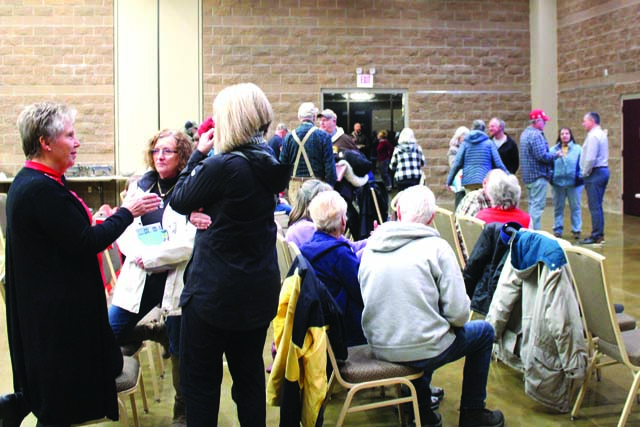
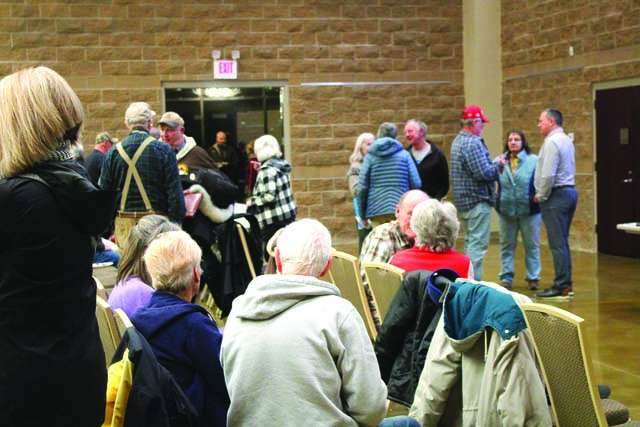
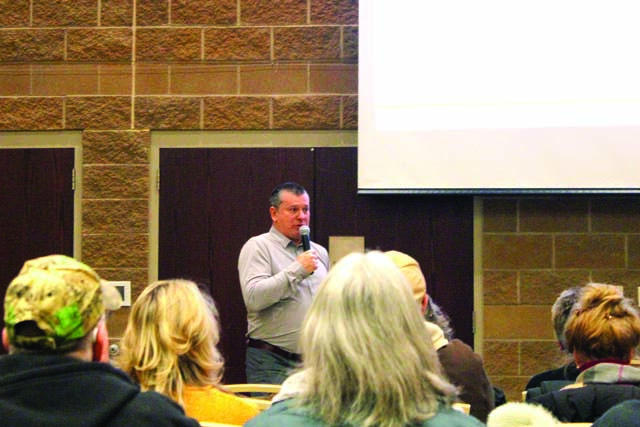
In a recent community engagement meeting held at the Platte Valley Community Center on January 17, OV Consulting, represented by Chris Vogelsnag, brought together town residents to share ideas and findings from previous meetings and surveys. OV Consulting, a dedicated team of planners, designers, engineers, and community-focused individuals, is committed to building stronger communities through integrated planning, innovative design, and transparent engagement.
The primary objective of this gathering was to present insights gathered from previous discussions and surveys. Attendees were treated to delicious refreshments courtesy of The Malt, and Valley Village Childcare ensured parents could participate by offering supervision and kid-friendly activities. The Future Business Leaders of America from the high school also volunteered to help watch children.
At the heart of this endeavor is the Structures Asset Management Process (STAMP), which delves into the transportation and recreation goals set by the comprehensive master plan. STAMP evaluates alternatives, recommends improvements, assesses management and maintenance strategies, and explores potential funding avenues.
The master plan outlines specific actions to achieve its goals:
. Create a mobility roadmap for the community, focusing on sidewalks, trails, and bicycles, with active participation from residents.
.Conduct a comprehensive analysis of the current transportation landscape to identify opportunities for safety enhancements and diversified transportation options.
. Set the stage for future actions and investments, developing an implementation plan with cost estimates.
. Establish a robust maintenance and management plan to ensure long-term sustainability.
. Formulate a 5-year action plan, including potential partnerships to maximize resources.
The project followed a well-structured schedule, with key milestones including conducting an existing condition inventory, visioning, and defining goals and objectives from August to September. Then from October to January, the project focused on developing concepts, refining them, and facilitating team workshops. In the next phase from January to March, the project involves crafting recommendations, devising an implementation strategy, estimating costs, and drafting the Transportation Alternatives Master Plan. In April, the plan will reach its finalization stage, and, hopefully, in May, the plan will be adopted.
The planning process has been inclusive, involving meetings with the Saratoga Town Council, Planning Commission, community meetings, and a steering committee. Surveys conducted within the community have provided valuable insights into residents’ transportation preferences and challenges.
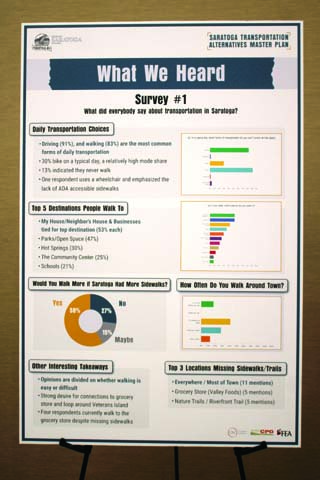
The survey summary highlights that town residents prefer walking and driving as their primary modes of transportation. Approximately 60% of respondents expressed a willingness to walk more if additional sidewalks and trails were available. Notable walking destinations include neighborhoods, the post office, businesses along Bridge Ave., and Veteran’s Island. However, some residents face difficulties due to the absence of sidewalks, leading them to walk on roadways. Winter conditions also pose challenges for pedestrians.
Several themes emerged from the surveys; the need for improved connections to the grocery store, concerns about conflicts between trails and private property ans differing opinions on the ease of walking around town.
Tier 1 projects have been identified as top priorities. These projects are prime candidates for inclusion in the town’s budgeting process or for seeking state or federal grant funding. They promise to enhance safety and convenience for various user groups, including children, elderly residents, and downtown visitors.
The three Tier 1 projects are as follows:
. HWY 130 improvements: Infrastructure enhancements, including trails, crossings, curb ramps, and a trail connecting downtown to Valley Foods grocery store. Also, downtown intersection crossing improvements and sidewalk updates to ADA standards.
. Hot Pool Area Improvements: Focused on improving river access, circulation, accessibility, and wayfinding enhancements around the Platte River Bridge.
. Elm Ave Safety Corridor: Addresses safety concerns around the school bus drop-off area, proposing painted pathways, flashing lights, and other safety measures to protect students and pedestrians.
Additional suggestions include improving downtown river access and creating a low-maintenance public space along the riverfront.
The meeting concluded with a Q&A session, allowing community members to actively engage and voice their opinions. Ellie Dana-Raymer highlighted the importance of prioritizing the repair of geothermal sidewalks along Bridge Street, while another participant stressed the urgency of the Elm Ave. project due to the safety of children in the area.
Vogelsnag emphasized the project’s focus on pedestrian safety and shared that the concept phase was nearing completion. Despite concerns over costs and the town’s vision, the active participation of the community has been promising, with 200 unique visitors to the project’s website and 42 valuable ideas generated.
For more information on this transformative initiative, please visit www.saratogamoves.com.